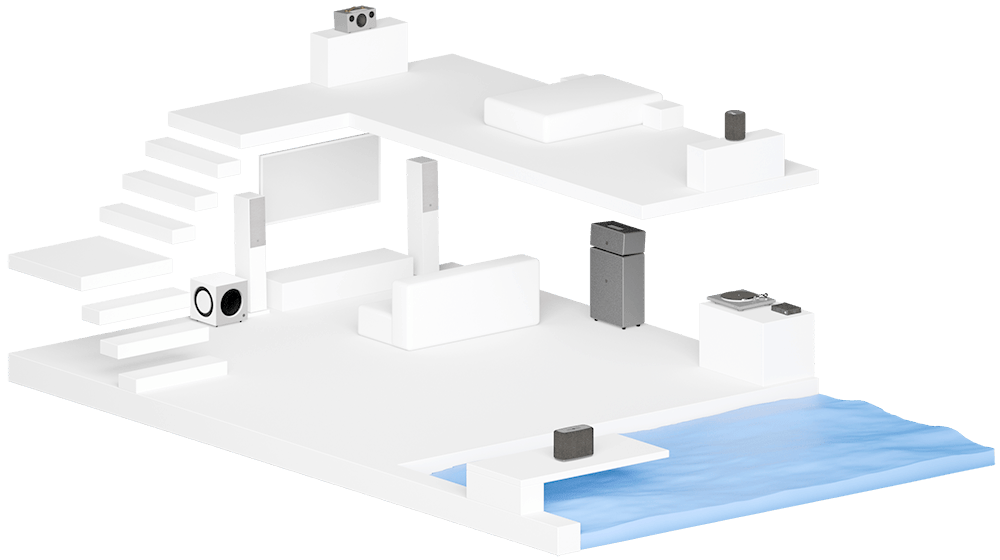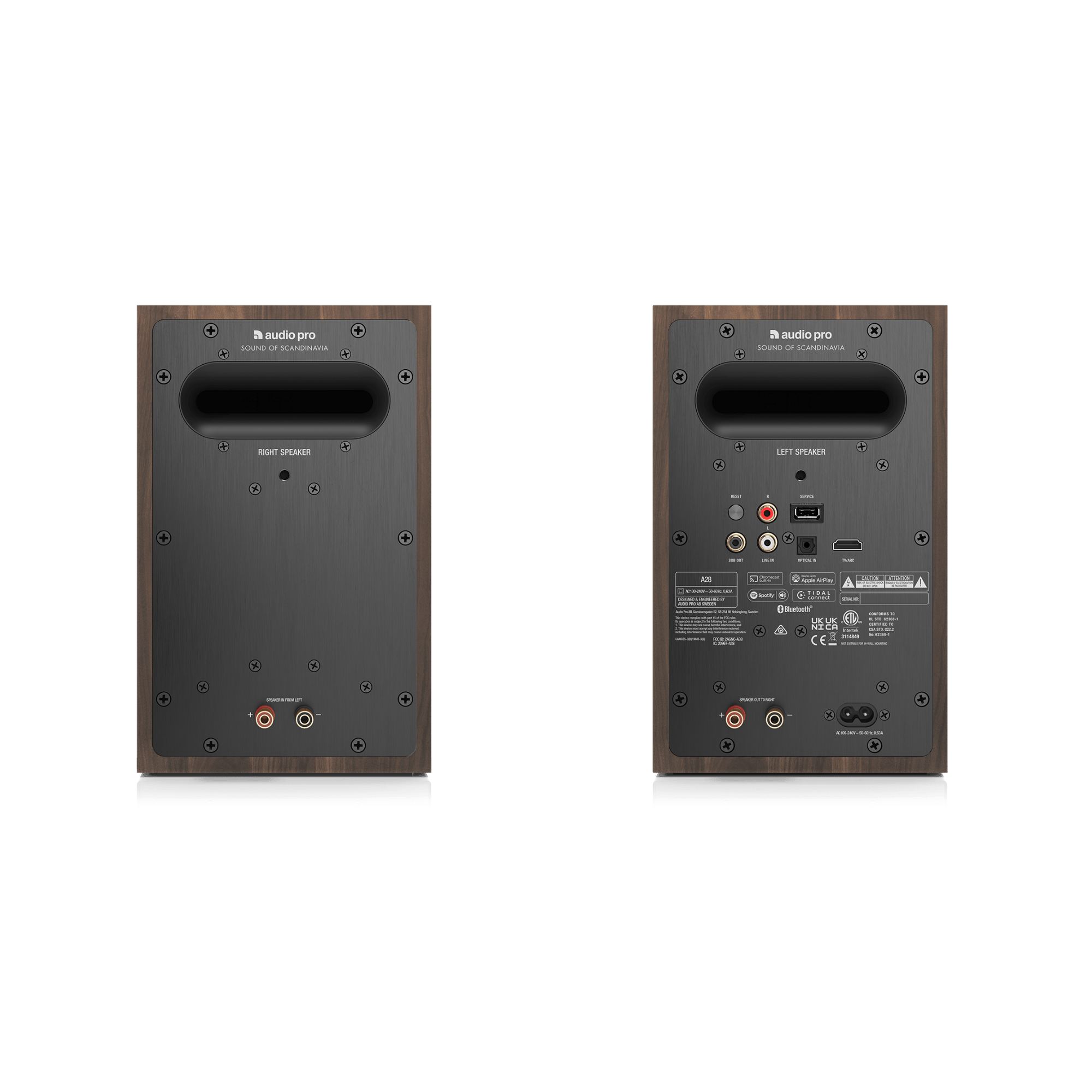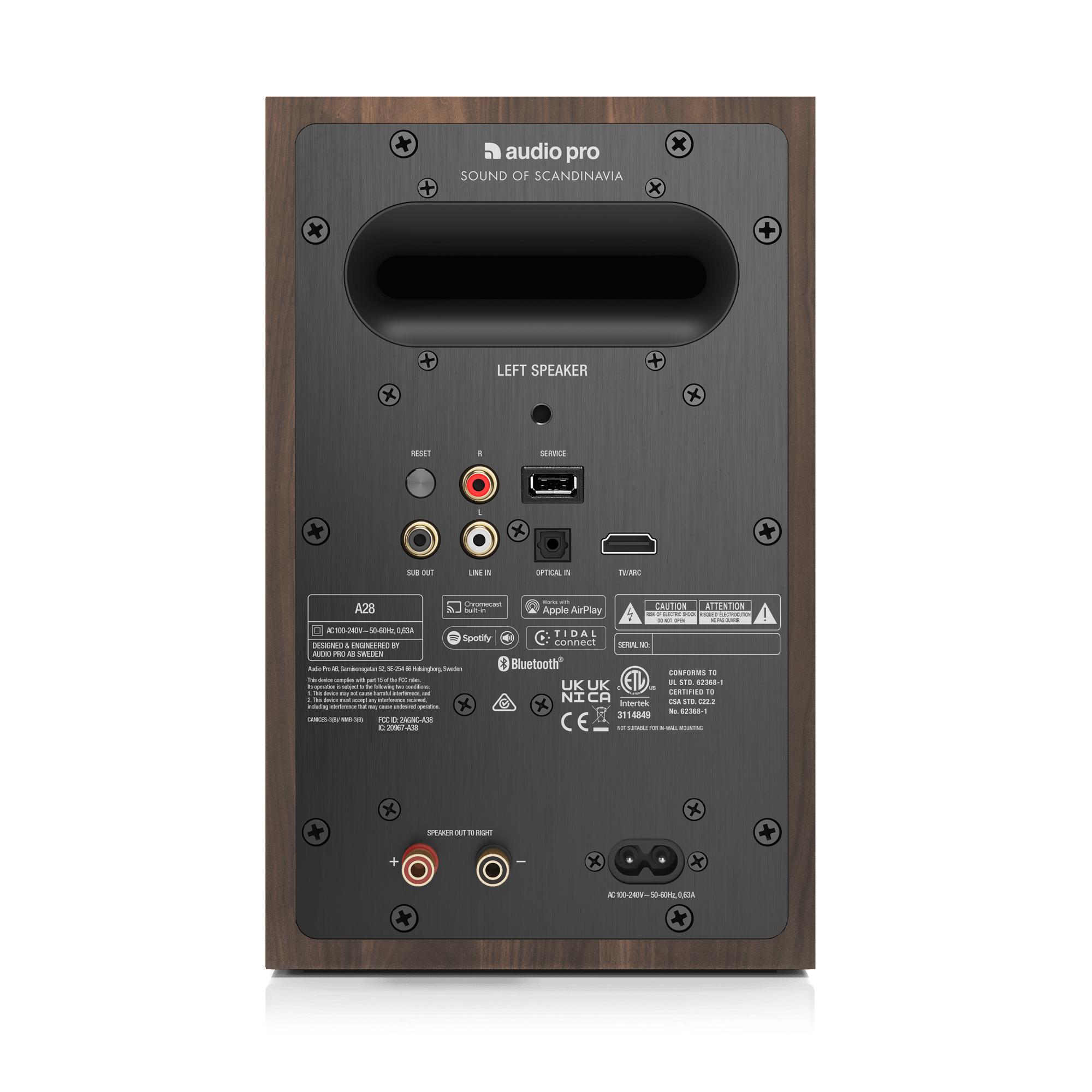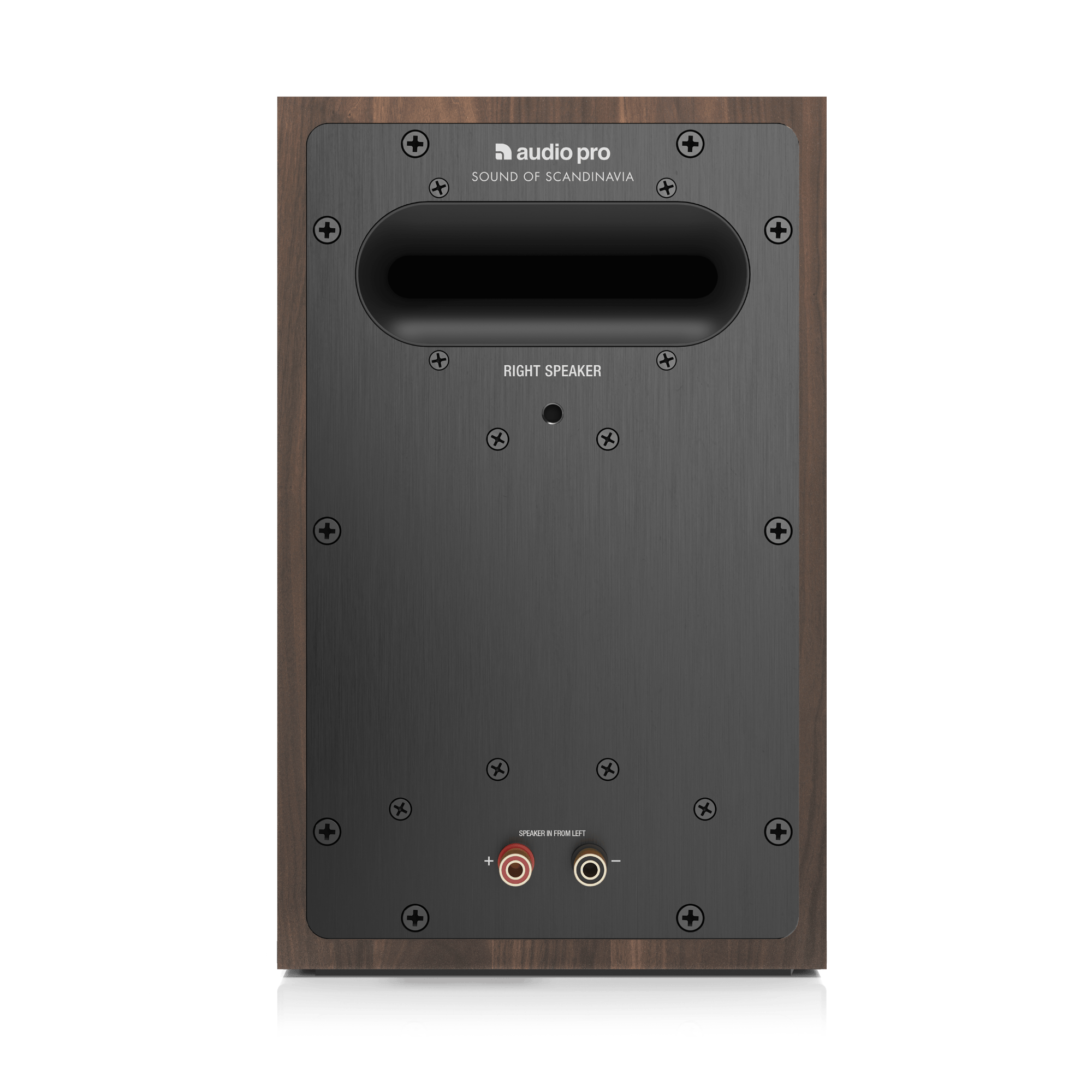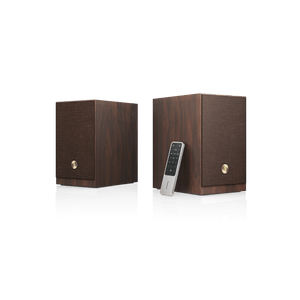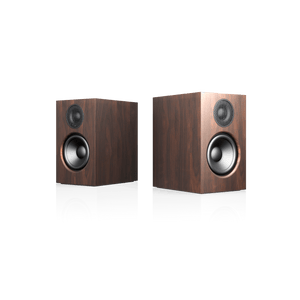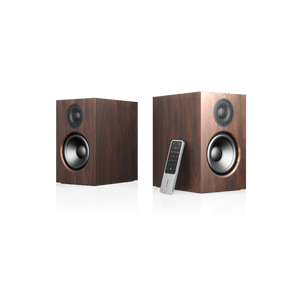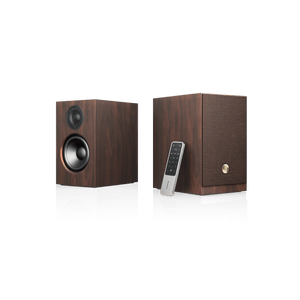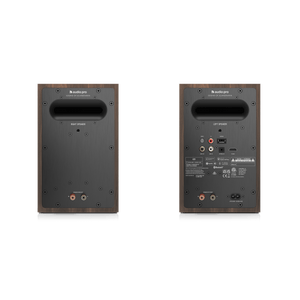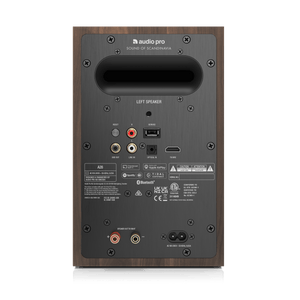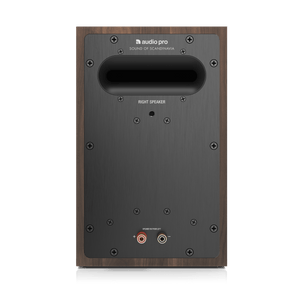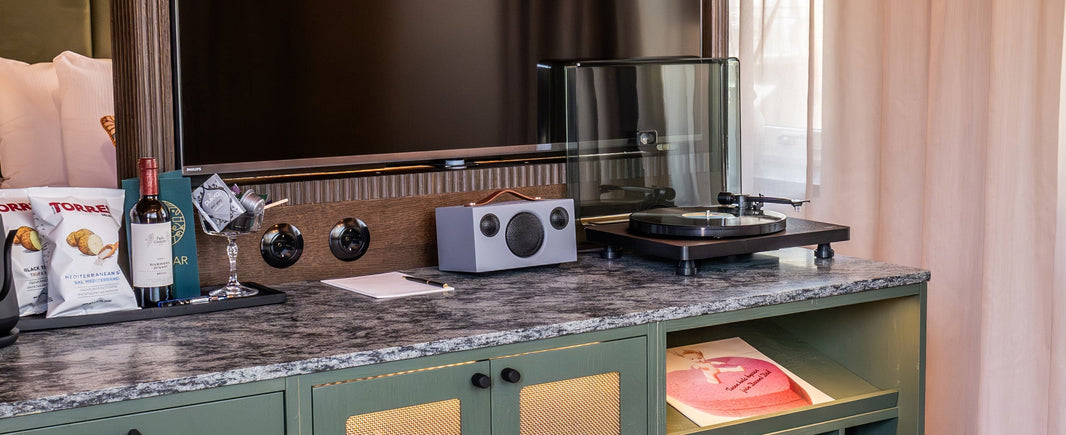



A room’s acoustics play a major part in the ultimate sound quality coming from your sound system. When a speaker is evaluated, tested and measured by professionals, an echo-free (anechoic) test chamber is used. However, there is very little correlation between this anechoic chamber and the acoustics the speaker will be subject to in your home. In your living room, there will be numerous sound reflections – from walls, floor and ceiling, as well as furniture – and each will ‘color’ the sound in unpredictable ways. By decorating with curtains and carpets, stuffed furniture and pillows – which will absorb sound – you can dampen these reflections somewhat.
How you choose to place your loudspeakers in relation to windows, doors and the dimensions of the room will also affect their sound. Windows and doors can resonate with deep base notes, and doors openings (or open windows) can lead the sound out of the room. The closer a speaker is placed to the corners, walls, ceiling or floor of the room, the stronger will be the speaker’s bass sound reproduction. Placement advice follows below.
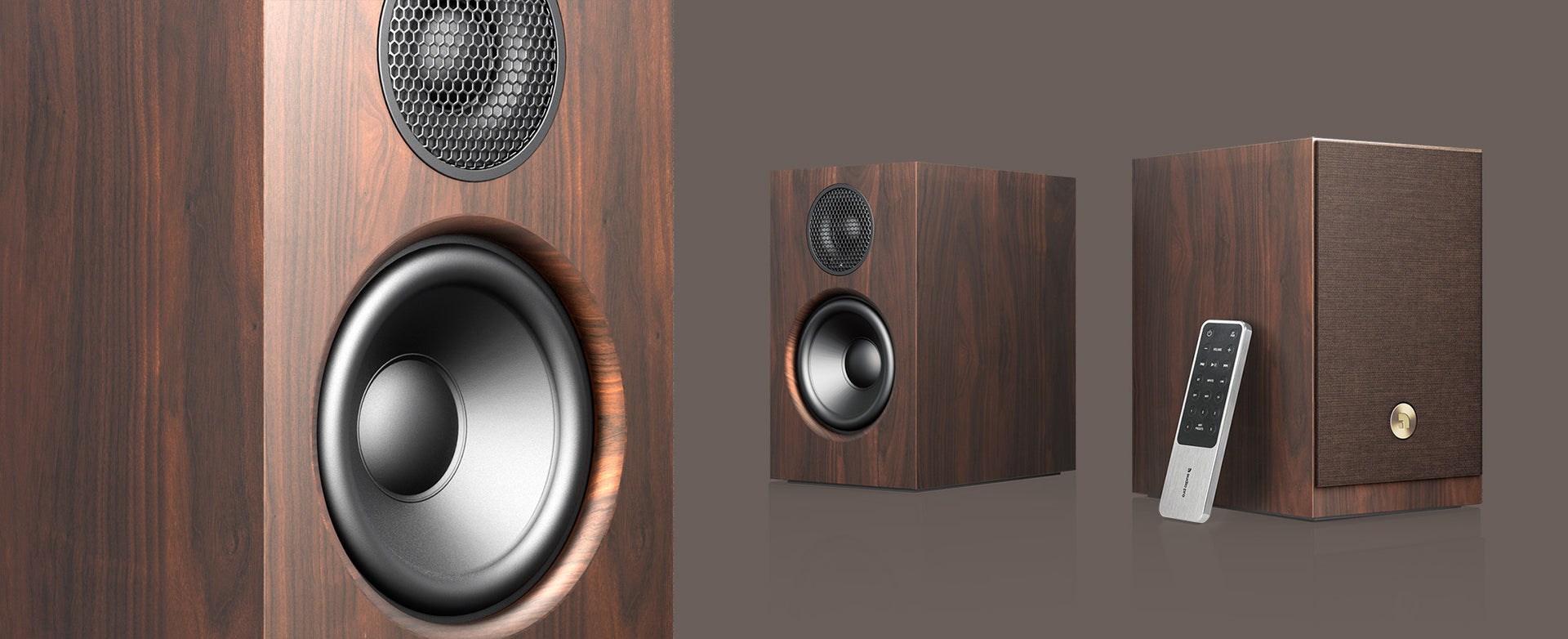
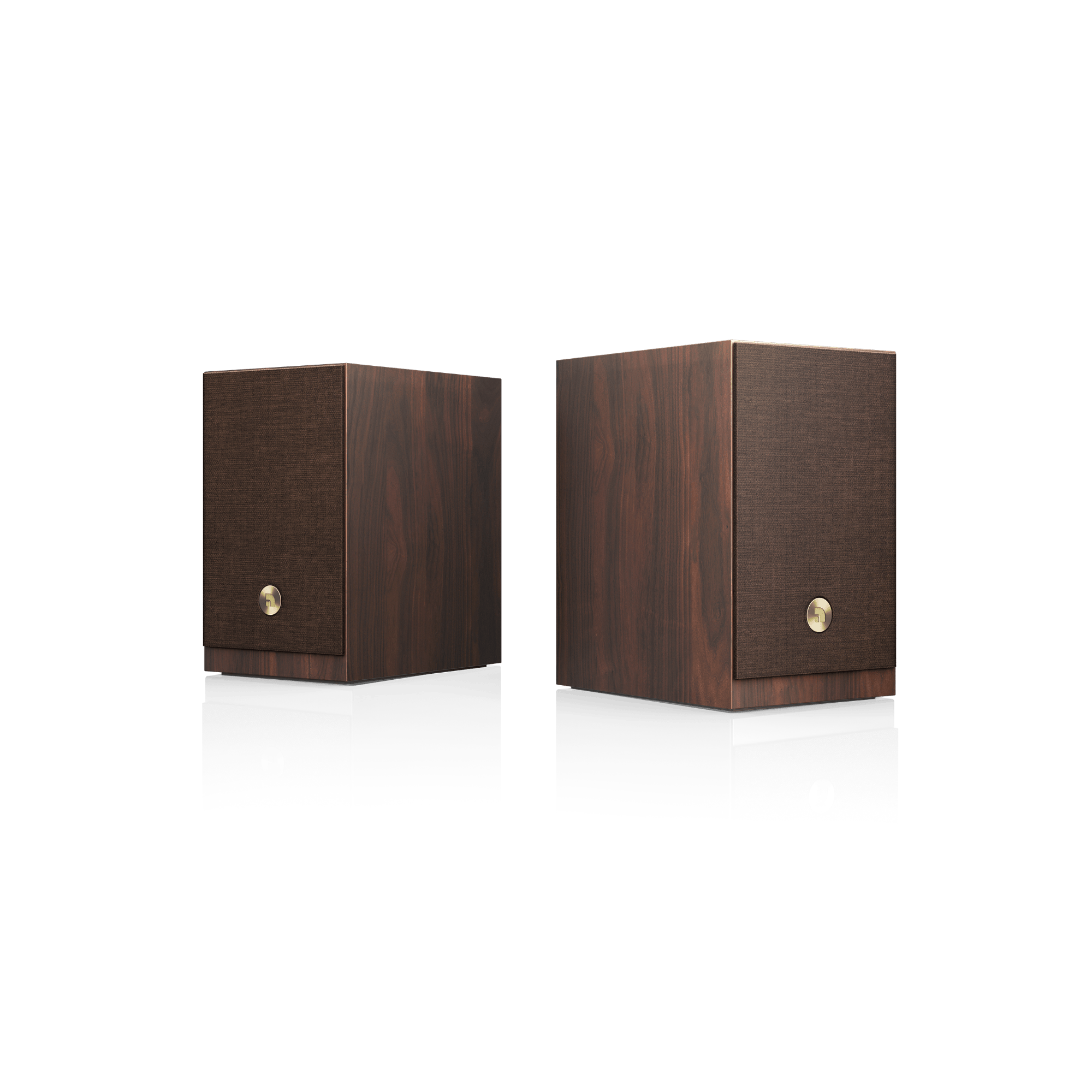
SPEAKER PLACEMENT FOR HiFi

Use the
listening position (where you will sit) as the starting point, and start by
placing the speakers against the opposite wall. The key ‘figure’ for getting a
good sound image in speaker placement is the triangle: with yourself at the
apex, the speakers should be equidistant from you and closer to each other than
they are to you. By aiming the speakers at the listening position, you can
often broaden the sound image. Experiment until you are satisfied.
If yours are
floorstanders, their elements will be at the right height when you are sitting
in the listening position. If you are using smaller speakers, you may need
speaker stands to achieve a correct height. If you plan to place the speakers
on a bookshelf, ensure that the speakers do not have bass reflex ports at the
back. If they do, this position will defeat the purpose of the port – speakers
need space to deliver their best results.
SPEAKER PLACEMENT
FOR HOME THEATER
The centerspeaker
This is perhaps the most important speaker in a home theater system, as it delivers all voice and special effects that occur in the film. Make sure that the center speaker is voice-matched with the rest of the front speakers, so that each sound that ‘travels’ across the front speakers’ sound image maintains its uniform character. Place the center speaker as close to the video image as possible – preferably directly below or above the TV screen.
Front speakers
It’s important to match the front speakers with the center speaker, as well as each other, to give a balanced, natural sound. Place these three speakers in line and level with each other, to optimize your film experience.
Surround speakers
The back speakers in a home theater system are called surround speakers, and it is here you can clearly see the difference between analogue and digital sound systems. In an analogue system these speakers needn’t be voice-matched with the front speakers – their sound reproduction is in mono and in a limited frequency range. In a digital system, the opposite is true. Surround speakers transmit in stereo, and in a wide frequency range, and must be voice-matched with all other speakers in the system except the subwoofer. A digital system transmits on 5 separate channels.
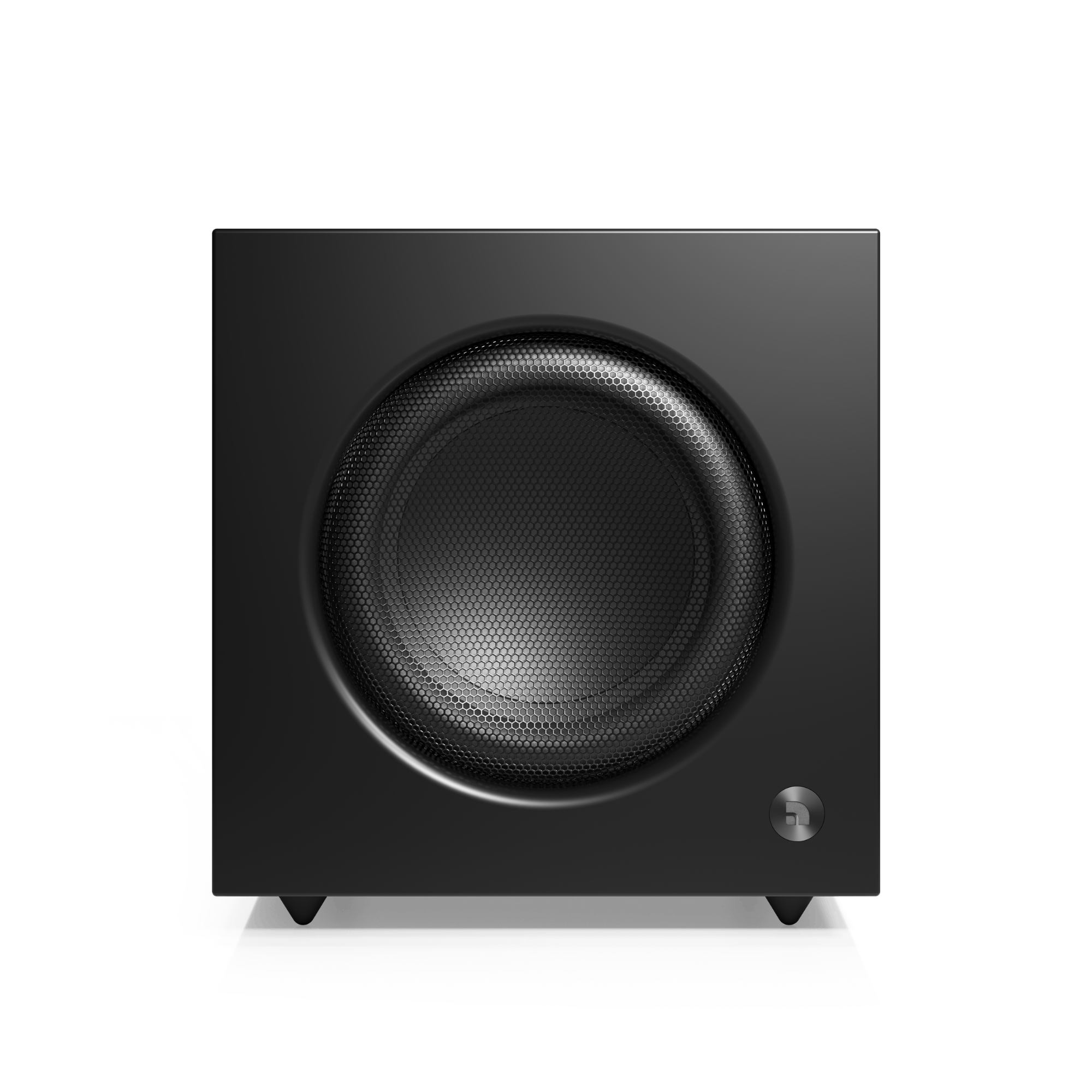
Subwoofer
Because it
‘only’ delivers deep bass (under 100 Hz), and the human ear cannot localize
sound at these frequencies, the subwoofer does not need to be visible to the
listener. However, its placement in the room is critical, and it is best you
test locations until you are fully satisfied: the sound should be pure and
deep, and neither ‘rumbly’ or muted. We recommend a placement near a wall
(which will strengthen the signal by up to 3dB) or in a corner (up to 6dB more
signal strength).